
Burnout, Authenticity, and the Quiet Resistance of Running a Business That Fits
I've been thinking a lot about burnout lately.
Not the hustle-phase burnout that comes with building something from nothing. Not the "I'm just getting started and wearing all the hats" kind of tired.
I'm talking about the burnout that hits after you've already built something real. After you've proven yourself, earned your clients, and figured out your work.
The kind where your business is successful by most measures, but running it feels heavier than it used to. Where you're doing all the right things, but something's off and you can't quite name it.
I've felt it. And I see it constantly in the business owners I work with.
The pattern underneath the exhaustion
Here's what I've noticed: the business owners who are most burned out aren't usually the ones doing too much.
They're the ones doing the right things inside the wrong container.
Their business evolved. They added services, refined their process, got clearer on who they wanted to work with. But their website still says what they said three years ago. Their messaging still speaks to their old audience. Their brand still looks like where they started, not where they are.
And now there's a gap between who they've become and what the world sees.
So they compensate. They over-explain on sales calls. They attract inquiries that aren't quite right. They cringe when they send someone their website link. They spend energy they don't have manually bridging a gap that shouldn't exist.
That's not a workload problem. That's an alignment problem.
And alignment problems don't get fixed by working less. They get fixed by getting clear.
But here's where it gets bigger
I've been sitting with this idea that burnout isn't just a business problem. It's a symptom of something larger.
We live in a culture that rewards performance over presence. A culture that tells us to optimize, automate, and scale, often at the expense of the thing that made our work meaningful in the first place.
There's pressure to look polished. To sound like everyone else. To follow the formula because the formula "works."
And when your business systems don't fit anymore, you start performing instead of connecting. You're so busy keeping up appearances that you lose yourself in the process.
You become a version of your business instead of the person behind it.
Authenticity as resistance
I keep coming back to this: in a world that profits from disconnection, showing up as yourself is a radical act.
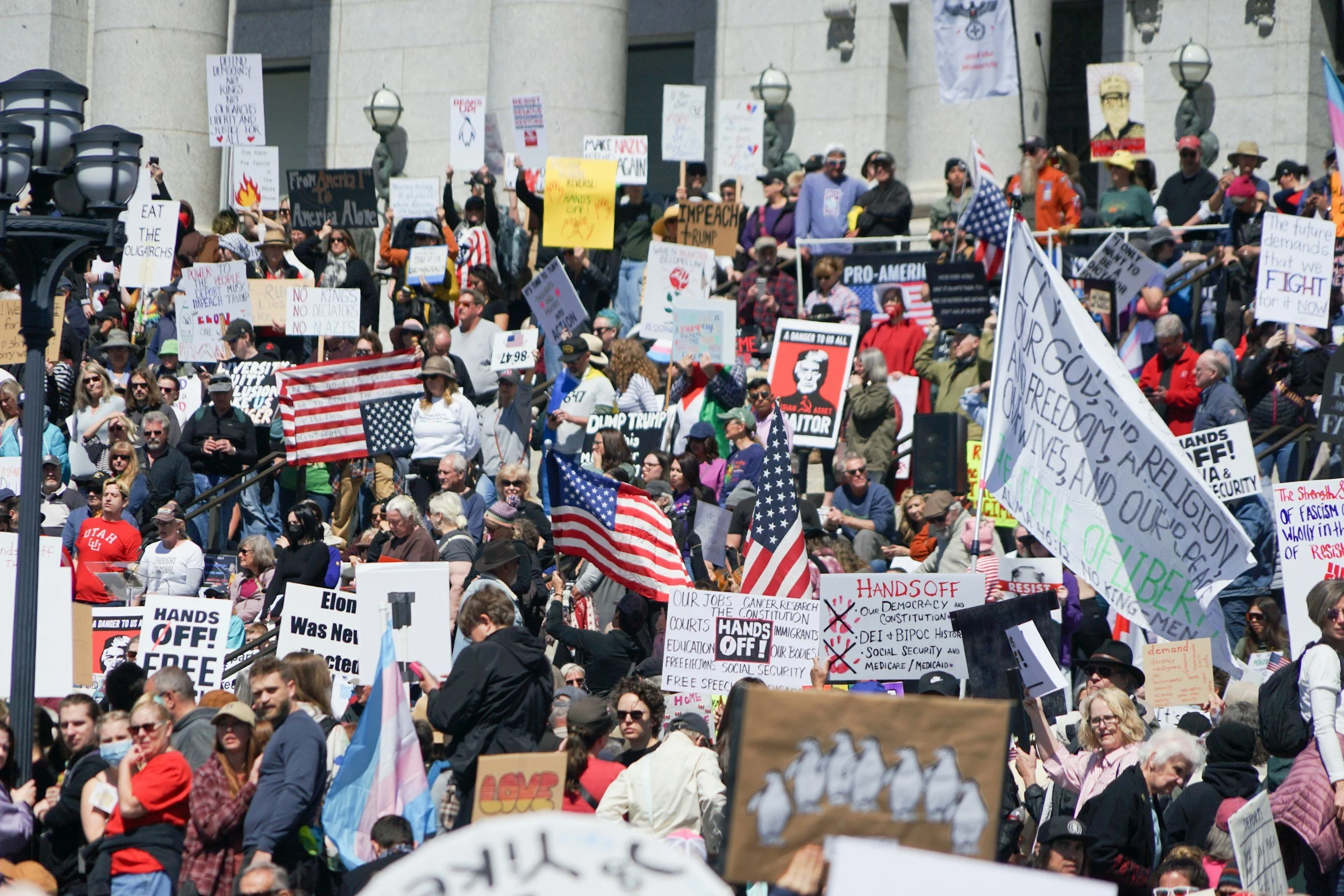
Fascism, and the systems adjacent to it, thrive on dehumanization. On division. On making us feel isolated, powerless, and like nothing we do matters.
Authenticity is the opposite of that.
When you build a business rooted in real connection with your clients, your community, and your audience, you're creating pockets of humanity. You're reminding people they're not alone. That there are still people out there doing things differently.
And when you let your business reflect who you actually are instead of who you think you should be? That's not just good strategy. That's resistance.
The cost of staying misaligned
I'm not being dramatic when I say this: staying out of alignment has a cost beyond just feeling tired.
When you're burned out, you make worse decisions. You react instead of respond. You say yes to things you should say no to because you don't have the energy to hold boundaries.
When your business doesn't reflect you, you attract people who aren't right for you. You spend your days working with clients who drain you, on projects that don't light you up, building something that feels less and less like yours.
And when you're performing instead of connecting, you lose the thing that made your business work in the first place: trust. Real, human trust. The kind that comes from showing up as yourself, consistently, over time.
You can't build that while you're exhausted and hiding behind systems that don't fit.
What realignment actually looks like
Getting aligned doesn't mean burning it all down and starting over.
It means pausing long enough to see clearly. To ask yourself: where is my business now? Who do I actually want to serve? What do I want to be known for? What's no longer true?
It means looking at your website, your messaging, and your brand with honest eyes. Asking where it's still reflecting the old version of you. Where it's creating friction. Where it's making you work harder than you should.
It means fixing the foundation, not just the surface. Getting clear on the message underneath the words so that everything else can follow.
And it means giving yourself permission to let your business catch up to who you've become.
That's not indulgent. That's necessary.
The quiet resistance of running a business that fits
I don't think we talk enough about how political it is to run a small business with integrity.
To charge what you're worth and pay people fairly. To build relationships instead of funnels. To prioritize sustainability over scale. To show up as a real person in a sea of polished brands.
These choices don't make headlines. They don't go viral. But they matter.
Every time you choose connection over manipulation, you're building something real. Every time you refuse to perform and show up as yourself instead, you're proving there's another way. Every time you support another small business doing the same, you're strengthening a web of people who are doing things differently.
That's the quiet resistance.
And it starts with alignment. With building a business that actually fits who you are. Not who you were. Not who you think you should be. But who you are right now.
An invitation
If you're feeling the weight of a business that doesn't quite fit anymore, I want you to know something: you're not behind. You're not broken. You're not bad at this.
You've just evolved. And now everything else needs to catch up.
That's not a failure. That's growth.
And the work of realignment, of getting clear and letting your business reflect who you actually are, isn't just good for your bottom line.
It's good for your soul. It's good for your clients. And in its own quiet way, it's good for the world.
So here's my ask:
This week, take one small step toward alignment.
Look at your website and ask yourself if it still sounds like you. Reach out to a client and have a real conversation. Support a small business that's doing things differently. Or just sit with the question: where am I performing instead of connecting?
We can't control everything. But we can control how we show up.
And that ripples further than we think.
Nikki Holbrook is the founder of Flower Buds Creative, where she helps established service-based business owners find clarity in their brand and website so they can stop performing and start connecting.